Japan tourist attractions range from Tokyo’s modern landmarks and Kyoto’s historic temples to Mount Fuji, Nara’s cultural sites, Hiroshima’s memorials, and Osaka’s energetic neighborhoods. The best choice depends on how many days you have, which regions you want to combine, and whether your priority is history, scenery, food, shopping, or cultural experiences.
For a first trip, the most efficient approach is not to visit every famous attraction. Instead, build your itinerary around a few major destinations and choose attractions that are geographically close to each other. That strategy gives you more sightseeing time and less time spent crossing cities.

What Are the Best Japan Tourist Attractions?
The best Japan tourist attractions for first-time visitors are Tokyo, Kyoto, Mount Fuji, Nara, Osaka, Hiroshima, Himeji, Nikko, Kanazawa, Shirakawa-go, Miyajima, Hakone, Sapporo, Okinawa, and Kamakura.
These destinations provide a useful mix of urban sightseeing, historic architecture, religious heritage, mountain scenery, food, beaches, gardens, museums, and traditional neighborhoods.
Japan’s official tourism organization also organizes attractions by interests such as scenic spots, natural wonders, museums, parks and gardens, railways, islands, and cultural experiences. That makes it easier to select attractions based on the type of trip you actually want. Explore official Japan attractions on JNTO.
| Destination | Best For | Recommended Time | Trip Priority |
|---|---|---|---|
| Tokyo | City life, shopping, food | 3–4 days | Essential |
| Kyoto | Temples, gardens, traditional culture | 2–3 days | Essential |
| Mount Fuji | Scenery and photography | 1–2 days | High |
| Nara | Historic temples and deer | 1 day | High |
| Osaka | Food, nightlife and entertainment | 2 days | High |
| Hiroshima | History and Miyajima | 1–2 days | High |
1. Tokyo
Tokyo is the best starting point for Japan sightseeing if you want a combination of modern landmarks, historic neighborhoods, food, shopping, and entertainment.
Tokyo is enormous, so the biggest mistake is treating the entire city as one sightseeing area. Divide your visit into neighborhoods instead.
- Asakusa: traditional atmosphere and Senso-ji.
- Shibuya: famous crossing, shopping and nightlife.
- Shinjuku: skyscrapers, restaurants and entertainment.
- Ueno: museums, parks and cultural attractions.
- Harajuku: fashion, Meiji Jingu and nearby green spaces.
Travelers with only a weekend can use a neighborhood-based plan instead of attempting every landmark. Our Tokyo weekend itinerary is useful when you need to compress Tokyo sightseeing into a short trip.
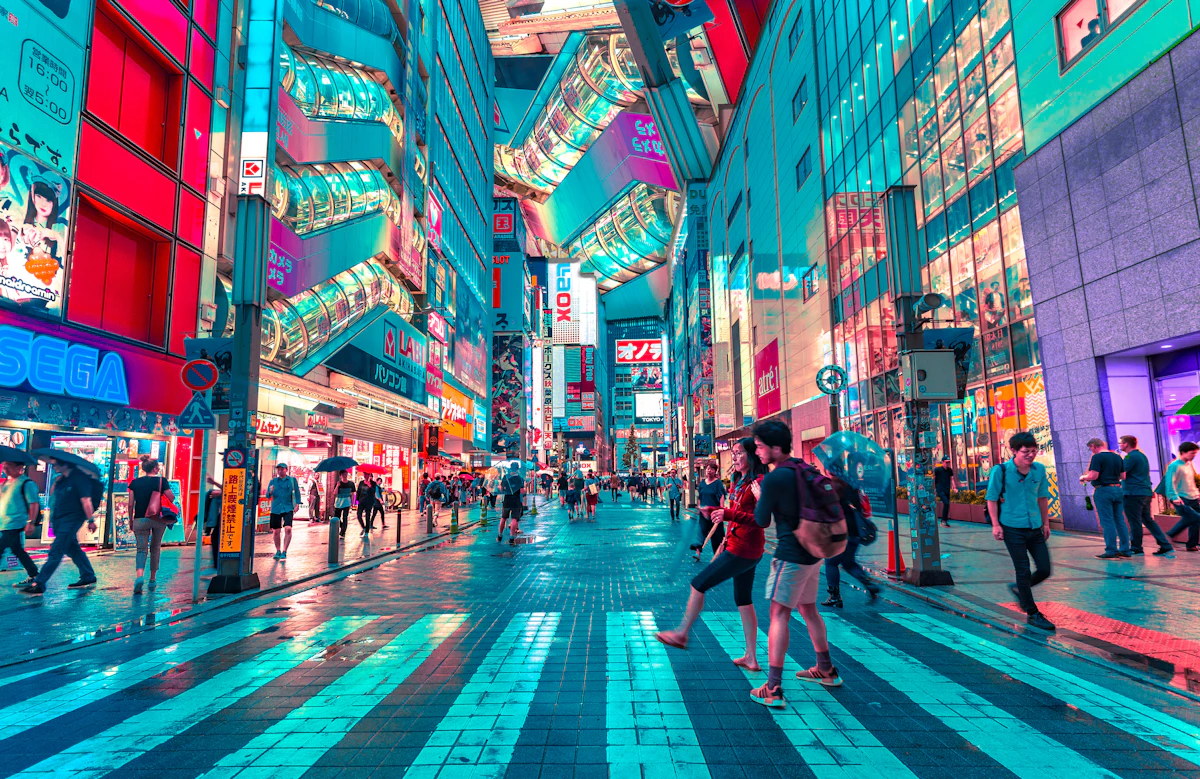
Pro tip: Group attractions by neighborhood. A day covering Asakusa, Ueno and nearby districts is usually more efficient than repeatedly crossing Tokyo.
2. Kyoto
Kyoto is one of the strongest choices for traditional Japan attractions because its temples, shrines, gardens and historic districts show a different side of the country from Tokyo.
Important Kyoto sightseeing areas include Fushimi Inari Taisha, Kiyomizu-dera, Arashiyama, Gion and the Higashiyama area.
Fushimi Inari is particularly useful for travelers who want a memorable walking experience. The torii-gate paths extend into the wooded Mount Inari area, so you can choose how far you want to walk rather than treating the attraction as a quick photo stop.
For a deeper district-by-district plan, see our complete Kyoto travel guide. It works especially well as the next step after identifying which Kyoto attractions you want to prioritize.

Kyoto is also part of Japan’s UNESCO-listed cultural heritage. UNESCO lists the Historic Monuments of Ancient Kyoto among Japan’s World Heritage properties. See UNESCO’s Kyoto World Heritage information.
3. Mount Fuji
Mount Fuji is one of the most recognizable places to visit in Japan and is best experienced from a viewpoint or surrounding destination that matches your travel schedule.
You do not necessarily need to climb Mount Fuji to enjoy the area. Visitors can build a Fuji-focused day around viewpoints, lakes, traditional towns and scenic photography.
Chureito Pagoda in Fujiyoshida is particularly popular for photographs combining Japanese architecture with Mount Fuji. Lake Kawaguchi is another practical base for Fuji-area sightseeing.
Japan’s official tourism organization describes Fujisan as a UNESCO World Heritage cultural property and a major source of artistic inspiration. See JNTO’s Mount Fuji information.
Note: Visibility matters. A carefully planned Mount Fuji day can still produce poor views if clouds cover the mountain, so avoid building your entire Japan trip around one photograph.
4. Nara
Nara is one of the easiest cultural day trips from Kyoto or Osaka and is particularly valuable for temples, shrines, historic architecture and Nara Park.
The city’s major attractions include Todai-ji, Kasuga Taisha and Nara Park. Todai-ji is especially significant because the temple complex houses the Great Buddha.
Nara’s historic monuments are also recognized by UNESCO. The Historic Monuments of Ancient Nara reflect the city’s role as Japan’s capital from 710 to 784. Read UNESCO’s Nara World Heritage overview.
A practical approach is to arrive early, visit the major temple area, walk through Nara Park, and continue toward the shrine district before returning to Kyoto or Osaka.
5. Osaka
Osaka is one of the best Japan destinations for travelers who want food, nightlife, shopping and a more energetic urban atmosphere.
Osaka Castle, Dotonbori, Umeda and Shinsekai provide very different experiences, which makes Osaka easy to combine with a broader Japan itinerary.
Osaka also works well as a base for nearby attractions. JNTO’s Kansai itinerary combines Kyoto, Nara and Osaka into a three-day route, demonstrating how efficiently these destinations can be connected. See JNTO’s Kansai itinerary.
If your trip is focused on saving money, compare accommodation and transportation costs before choosing where to sleep. Our Japan vacation packages guide can also help when comparing bundled travel options.
6. Hiroshima
Hiroshima is an important Japan attraction for travelers who want to understand the country’s modern history and visit the Hiroshima Peace Memorial.
The Hiroshima Peace Memorial Park and Atomic Bomb Dome should be approached as places of remembrance rather than ordinary sightseeing stops.
Hiroshima also provides convenient access to Miyajima, making it possible to combine historical and cultural experiences within the same regional visit.
The Hiroshima Peace Memorial is part of Japan’s UNESCO World Heritage portfolio. JNTO also identifies Hiroshima’s memorial and Itsukushima as major World Heritage attractions. Explore Japan’s official World Heritage attractions.
7. Himeji Castle
Himeji Castle is one of the strongest choices for travelers who want to see a major historic Japanese castle without adding an entire extra destination to their itinerary.
The castle’s distinctive white exterior and extensive defensive design make it more than a simple photo stop. Allow enough time to explore the grounds and interior areas open to visitors.
Himeji is particularly convenient when traveling between Osaka and Hiroshima because it can fit naturally into a west-Japan route.
8. Nikko
Nikko is an excellent choice for travelers who want ornate shrines, mountain scenery and a cultural escape from Tokyo.
Nikko’s major religious sites include Toshogu Shrine and other historic complexes surrounded by forested landscapes.
The destination is especially attractive when you want to add nature and heritage without committing to a long-distance journey across Japan.
Pro tip: Nikko works better as a deliberate day trip than as an attraction squeezed into an already crowded Tokyo schedule.
9. Kanazawa
Kanazawa is a strong alternative to the busiest traditional tourist routes because it combines gardens, historic districts, crafts and regional food.
Kenrokuen Garden, Kanazawa Castle and the city’s preserved cultural neighborhoods are the main reasons to consider a visit.
Kanazawa is useful for travelers who have already seen Tokyo and Kyoto and want additional Japanese cultural depth without simply repeating the same temple experience.
10. Shirakawa-go
Shirakawa-go is best for travelers seeking mountain scenery and traditional villages rather than major-city attractions.
The village is famous for its traditional gassho-zukuri houses and surrounding mountain landscape.
Japan’s official tourism organization includes Shirakawa-go and Gokayama among its World Heritage destinations. Review Japan’s official World Heritage destinations.
This destination requires more logistical planning than Tokyo or Kyoto, so check transport schedules before committing to a day trip.
11. Miyajima
Miyajima is one of the most memorable Japanese sightseeing destinations for visitors who want a combination of island scenery, shrine architecture and coastal views.
Itsukushima Shrine is the island’s defining cultural attraction, while the surrounding area provides walking routes, viewpoints and traditional streets.
Itsukushima Shrine is a UNESCO World Heritage property, making Miyajima particularly valuable for travelers interested in Japan’s religious and architectural heritage.
Because Miyajima involves ferry transportation, allow additional time instead of treating the island as a quick stop between Hiroshima attractions.
12. Hakone
Hakone is one of the most practical scenic escapes from Tokyo for hot springs, mountain views, museums and possible Mount Fuji scenery.
Hakone can appeal to travelers who want a slower experience after several busy city days.
The important planning point is to check transportation connections before setting out because Hakone sightseeing is spread across a relatively large area.
For travelers comparing Japan travel options, combining a major city with a nearby scenic destination can create a better balance than adding another distant city.
13. Sapporo
Sapporo is a strong choice for travelers who want to experience Hokkaido’s food, winter scenery, parks and northern Japanese culture.
The city is particularly attractive during winter, while nearby areas provide opportunities for nature and seasonal experiences.
Sapporo is geographically distant from Tokyo and Kyoto, so it makes more sense for a longer Japan vacation than a tightly packed one-week itinerary.
14. Okinawa
Okinawa is the better choice when your idea of Japan includes beaches, subtropical landscapes, island culture and a slower pace.
Okinawa is very different from the classic Tokyo-Kyoto route. Travelers should therefore choose it because they specifically want island scenery rather than simply adding another famous Japanese destination.
For a two-week or longer trip, Okinawa can be considered as a separate regional experience rather than something to squeeze between Tokyo and Kyoto.
15. Kamakura
Kamakura is an efficient day-trip destination from the Tokyo area for travelers interested in temples, shrines, historic streets and coastal scenery.
The Great Buddha is the most recognizable attraction, while temples and wooded walking routes give the destination more depth than a single landmark.
Kamakura is particularly useful when you want a historical experience without committing several days to another region.
How to Choose Japan Tourist Attractions for Your Trip
The best way to choose Japan tourist attractions is to match destinations to your available days instead of trying to collect every famous landmark.
For a 5-day Japan trip
Choose Tokyo and Kyoto, with one carefully selected day trip if transportation allows it.
- Days 1–3: Tokyo
- Day 4: Kyoto
- Day 5: Kyoto or a nearby attraction
This route prioritizes two major cultural contrasts instead of spreading five days across too many cities.
For a 7-day Japan trip
Tokyo, Kyoto and Osaka provide a practical seven-day framework for first-time visitors.
- 3 days Tokyo
- 2 days Kyoto
- 2 days Osaka with an optional Nara day trip
The Kansai region is especially efficient because Kyoto, Nara and Osaka can be connected without requiring separate long-distance travel days.
For a 10-day Japan trip
A 10-day itinerary gives you enough room to add Mount Fuji, Hiroshima or another regional destination without making every day a transfer day.
A practical structure is Tokyo → Mount Fuji area → Kyoto → Nara/Osaka → Hiroshima/Miyajima.
Before booking transportation, compare your expected train costs against available passes. The current JNTO guidance explains that the national Japan Rail Pass covers most JR lines but has important exclusions, including standard use of Nozomi and Mizuho services without an additional ticket. Check current Japan Rail Pass rules.
A Practical First-Time Japan Itinerary
A balanced first Japan trip should prioritize Tokyo, Kyoto, Osaka and one or two carefully selected day trips rather than attempting to cover the entire country.
| Day | Base | Main Experience |
|---|---|---|
| 1 | Tokyo | Asakusa and Ueno |
| 2 | Tokyo | Shibuya and Harajuku |
| 3 | Tokyo | Shinjuku and central Tokyo |
| 4 | Kyoto | Fushimi Inari and Higashiyama |
| 5 | Kyoto | Arashiyama and central Kyoto |
| 6 | Nara | Nara Park and Todai-ji |
| 7 | Osaka | Osaka Castle and Dotonbori |
This structure intentionally leaves some flexibility. Weather, attraction opening times, seasonal events and personal energy levels can change the best order.
How to Travel Between Major Japan Attractions
Japan’s rail network is the most practical way for many travelers to connect major cities, particularly when using high-speed Shinkansen services between Tokyo, Kyoto, Osaka and Hiroshima.
JNTO describes the country’s railway system as extensive, with local, rapid, express, limited-express and Shinkansen services serving different travel needs. Read the official JNTO guide to traveling by rail.
Do not automatically purchase a nationwide rail pass simply because you are visiting several cities. Compare the actual journeys you expect to make with the current pass price.
For longer-distance journeys, reserve seats when appropriate and allow extra time at large stations. Tokyo Station, Kyoto Station and Shin-Osaka can be confusing during your first visit.
Our cheap flights to Japan guide is useful when planning the international part of the trip, while our Japan trips overview can help connect attraction research with broader itinerary planning.
How Much Time Should You Spend at Japan Attractions?
Most major Japan attractions deserve two to four hours, while large cities and cultural districts require an entire day or more.
| Attraction Type | Useful Planning Window |
|---|---|
| Major temple or shrine | 1.5–3 hours |
| Historic castle | 2–3 hours |
| Mountain or scenic area | Half day to full day |
| Major city district | Half day |
| Theme park | Full day |
| Day-trip destination | Full day |
The key is to avoid scheduling five major attractions in one day. Travel between them, queues, meals and navigation can consume much more time than a map suggests.
How to Save Money While Visiting Japan Attractions
The easiest way to reduce Japan sightseeing costs is to minimize unnecessary transfers and compare transportation, accommodation and attraction expenses before booking.
- Choose accommodation close to a useful train station.
- Group attractions geographically.
- Compare individual train fares with rail-pass prices.
- Use free parks, neighborhoods and viewpoints alongside paid attractions.
- Book expensive activities only when they genuinely match your itinerary.
Bundled travel can sometimes simplify planning, but compare the individual components before purchasing a package. Our Japan travel packages guide is designed for that comparison.
Travelers can also monitor changing travel conditions through our Japan travel updates page before departure.
5 Common Mistakes When Visiting Japan Attractions
1. Trying to see too much
The biggest itinerary mistake is moving between cities so frequently that transportation replaces sightseeing.
Three well-experienced destinations are usually more valuable than seven rushed stops.
2. Ignoring geography
Grouping nearby attractions together saves both transportation time and energy.
Tokyo, Kyoto and Osaka should each be planned by neighborhood or district rather than as a random list of landmarks.
3. Planning around only photographs
A photograph does not tell you how much walking, waiting or transportation an attraction requires.
Check the actual route and expected visit duration before adding a location to your schedule.
4. Forgetting seasonal conditions
Weather and seasonal demand can change the experience of the same attraction dramatically.
Mount Fuji visibility, summer heat, winter conditions and spring or autumn crowds should influence your daily plan.
5. Treating every attraction as equally important
Prioritize attractions according to your interests instead of copying someone else’s top-ten list.
A traveler interested in Japanese history may prefer Kyoto, Nara and Himeji, while a food-focused visitor may prioritize Tokyo and Osaka.
Best Japan Tourist Attractions by Traveler Type
The right destination depends on what you want to experience rather than which attraction has the highest profile online.
| Traveler Type | Best Choices | Why |
|---|---|---|
| First-time visitor | Tokyo, Kyoto, Osaka | Broad introduction to Japan |
| History lover | Kyoto, Nara, Hiroshima, Himeji | Historic and cultural depth |
| Nature lover | Mount Fuji, Hakone, Nikko | Mountains, lakes and scenery |
| Food traveler | Tokyo, Osaka | Large variety of regional cuisine |
| Beach traveler | Okinawa | Island and subtropical experiences |
| Photography traveler | Mount Fuji, Kyoto, Nara | Landscapes and traditional architecture |
Why Japan Is Worth Planning Around Multiple Regions
Japan rewards travelers who combine contrasting regions because Tokyo, Kyoto, Osaka, Hiroshima, Hokkaido and Okinawa offer substantially different experiences.
That variety is one reason Japan works for repeat visitors as well as first-time travelers. A second trip does not need to repeat the same Tokyo-Kyoto route.
JNTO’s tourism statistics provide regional and market-level data on visitor arrivals, overnight stays and travel spending, giving travelers and publishers a useful official source for understanding tourism patterns. Explore Japan Tourism Statistics.
Japan Tourist Attractions FAQ
These answers address the most practical questions travelers ask when deciding which Japanese attractions to include.
What are the best Japan tourist attractions for first-time visitors?
Tokyo, Kyoto, Mount Fuji, Nara, Osaka and Hiroshima are among the best choices for first-time visitors because they provide a broad mix of modern, historic, cultural and scenic experiences.
How many Japan attractions can I visit in one day?
Two or three nearby attractions are usually more realistic than trying to visit five or six major sights in one day. Allow additional time for transportation, meals, queues and navigation.
What are the best Japanese attractions for a 7-day trip?
Tokyo, Kyoto and Osaka form one of the most practical seven-day combinations, with Nara or Mount Fuji as an optional day trip.
Is Mount Fuji worth visiting on a Japan vacation?
Mount Fuji is worth adding when scenic landscapes and photography are important to you, especially if you can dedicate enough time for weather flexibility.
What are the best historical attractions in Japan?
Kyoto, Nara, Himeji Castle, Hiroshima and Nikko are excellent choices for travelers focused on Japanese history, architecture and cultural heritage.
Can I visit Kyoto, Nara and Osaka on the same Japan trip?
Yes, Kyoto, Nara and Osaka are particularly easy to combine because they are all in the Kansai region. This makes them a practical cluster for a first Japan itinerary.
Are Japan tourist attractions expensive?
Costs vary widely because Japan has free parks and neighborhoods alongside paid temples, museums, observation decks, theme parks and guided experiences. Transportation and accommodation can have a larger effect on the total trip budget.
What is the easiest way to travel between Japanese attractions?
Trains are usually the easiest option for connecting major Japanese cities, while local buses, subways and walking handle many shorter sightseeing journeys.
Final Takeaway
The best Japan tourist attractions are not simply the most famous landmarks; they are the destinations that fit your available time, interests, budget and route.
For a first trip, start with Tokyo and Kyoto, then add Osaka, Nara, Mount Fuji or Hiroshima according to your trip length. For longer vacations, expand into destinations such as Nikko, Kanazawa, Shirakawa-go, Sapporo or Okinawa.
The most effective Japan itinerary is one that leaves enough time to experience each destination rather than turning the vacation into a race between train stations.
If you are still at the research stage, start with our Japan travel guide for first-time visitors, then compare flights, packages and individual destinations before booking.