Budget travel Norway for first-timers works best when you control accommodation, transportation, food, activities, and the number of destinations you attempt in one trip. Norway can be expensive, but the country also offers exceptional value through hiking, public spaces, fjord viewpoints, walking routes, scenic landscapes, and outdoor recreation that can cost little or nothing beyond getting there.
This practical guide explains how to plan affordable Norway travel without turning the trip into a race to spend as little as possible. You will find current 2026 reference prices, accommodation strategies, transportation planning, grocery tactics, destination-specific advice for Oslo, Bergen, Flåm, Lofoten, and Tromsø, plus a realistic seven-day budget itinerary.

How Much Does Budget Travel Norway Cost?
A realistic Norway budget is controlled mainly by accommodation, transportation, food, and paid excursions rather than by admission fees alone. Visit Norway’s current 2026 price guidance lists an average hotel room at about NOK 1,725 per night, basic campsite cabins from around NOK 700, cappuccino at roughly NOK 35–65, and a budget restaurant meal around NOK 190–350.
These figures are reference prices rather than guaranteed rates for every city or travel date. Visit Norway specifically notes that accommodation prices vary significantly by season, location, comfort level, and facilities.
For budget travel hacks, the important principle is to calculate the entire trip instead of optimizing only one expense. A cheap room far from your planned activities can become expensive when daily transportation is added.

A simple Norway trip budget formula
The simplest Norway travel budget formula is lodging plus food plus local transport plus intercity transport plus activities plus insurance plus contingency. Separating these categories makes hidden costs visible before you book.
| Expense | Budget planning question | Cost-control strategy |
|---|---|---|
| Accommodation | Where will I sleep each night? | Compare hotels, hostels, cabins and campsites |
| Food | How many meals will I buy? | Mix groceries with selected restaurant meals |
| Local transport | Can I walk or use public transit? | Use city networks before taxis |
| Intercity transport | How much does each destination change cost? | Reduce unnecessary transfers |
| Activities | Which experiences actually matter? | Select a few paid highlights |
| Insurance | What risks does the itinerary create? | Budget insurance before departure |
| Contingency | What happens if weather changes the plan? | Keep money uncommitted |
For a wider comparison before choosing Norway, see our guide to affordable countries to visit. The objective is not simply finding the lowest destination price; it is comparing total travel value.
How to Find Affordable Norway Accommodation
The strongest accommodation strategy for budget travel Norway for first-timers is to compare the total cost of lodging rather than the advertised nightly rate. A room near a station can sometimes be more useful than a cheaper room requiring multiple daily transfers.

1. Compare hotels, hostels, cabins and campsites
Hostels, cabins, apartments, guesthouses, farm stays, and campsites can provide alternatives to conventional hotel rooms. Visit Norway currently lists basic campsite cabins from around NOK 700 per night and identifies several lower-cost accommodation categories.
Use our hotels and accommodation resource when comparing properties. Check whether breakfast, cleaning charges, parking, kitchen access, and local transportation are included in the effective price.
2. Stay longer in one base
Staying two or three nights in one location can reduce repeated transportation, luggage handling, and booking costs. Changing hotels every morning may look efficient on a map but often produces a more expensive and tiring itinerary.
Bergen is particularly useful for this planning method because the city has a compact centre and public transportation connections into the wider region. Visit Norway describes Bergen as a base for exploring western Norway’s fjord landscapes.
For broader accommodation planning, combine this strategy with our guide to finding cheap hotels.
3. Look for kitchens when food costs matter
A kitchen can be more valuable than a slightly cheaper room when you intend to prepare several meals. The difference becomes important on a seven-day trip because restaurant spending repeats every day.
For couples or groups, compare a larger apartment or cabin against multiple hotel rooms. The right choice depends on occupancy, location, cleaning fees, and transport requirements.
How to Travel Around Norway Cheaply
The most effective cheap Norway transportation plan combines early booking, public transport, fewer destination changes, and realistic geographic planning. Norway is geographically large, so transportation should be designed before accommodation is finalized.
4. Compare trains, buses, ferries and flights
The cheapest transportation option is route-specific, so compare the complete journey rather than assuming that a flight, train, or bus is automatically cheaper. Include airport transfers, baggage, station transfers, waiting time, and local transport.
Entur provides nationwide public-transport journey planning, while Vy provides train and bus departure information and ticket purchasing for its services.
For route planning on your site, link to our trains and buses resource before booking long-distance transportation.
5. Treat Oslo to Bergen as a complete route decision
Oslo to Bergen should be compared as a door-to-door journey rather than simply as a ticket price. Vy confirms that Oslo–Bergen ticket prices vary according to travel date, time, booking distance, and ticket type.
The rail journey can also function as a scenic experience, which changes the value calculation for travelers who want landscape viewing without purchasing a separate sightseeing excursion.
6. Use public transportation inside cities
Walking plus local public transport can replace many taxi journeys during a city stay. In Oslo, Ruter’s ticket system covers buses, trams, metro services, boats, and specified Vy trains within applicable zones.
Ruter’s current ticket information explains ticket validity and transfers. Buying the appropriate ticket before boarding can also avoid onboard surcharges on applicable services.
For airport transportation, compare options through our airport transfer guide before paying for a private transfer.
How to Save Money on Food in Norway
The easiest way to control food costs in Norway is to combine supermarkets, simple breakfasts, packed lunches, tap water, and selected restaurant meals. Visit Norway currently lists budget restaurant meals around NOK 190–350 and cappuccino around NOK 35–65 as rough reference figures.

7. Build a grocery-first meal plan
A grocery-first food plan can reduce the number of expensive restaurant meals without eliminating local food experiences. Breakfast ingredients, fruit, yogurt, bread, cheese, oats, and packed lunches can work particularly well when accommodation provides a kitchen.
Visit Norway recommends buying local food and preparing meals when possible. For additional low-cost travel planning, see our travel-on-$50-a-day guide, while remembering that Norway-specific prices may require a higher budget.
8. Choose which meals deserve restaurant spending
Budget travelers do not need to eliminate restaurants; they need to decide which meals provide enough value to justify the cost. A practical pattern is grocery breakfast, packed lunch, and one selected restaurant meal rather than three restaurant meals every day.
Tap water can also help control small repeated purchases. Visit Norway notes that Norway has widespread electronic payment acceptance, making card or phone payment practical for everyday spending.
Which Norway Destinations Work for a Budget?
The most manageable budget destination is usually the place where accommodation, public transportation, walking, and free outdoor activities work together. There is no permanently cheapest Norwegian destination because rates change by season, demand, route, and accommodation supply.
Oslo for a compact first visit
Oslo can be a practical starting point because travelers can combine urban attractions, waterfront areas, parks, walking routes, and public transportation without immediately adding several long-distance transfers.
First-time visitors should avoid filling every day with paid museums and organized tours. Choose a small number of attractions and build the remaining time around walking and public spaces.
For paid experiences, compare options through our tours and activities section.
Bergen for a western Norway base
Bergen can be a useful base for first-time visitors who want city infrastructure while staying close to western Norway’s fjords. Visit Norway describes Bergen as a gateway to fjord landscapes and notes its compact centre and public transport network.
The budget decision is whether you need several organized excursions. One major fjord experience combined with independent city exploration can produce a more controlled budget than purchasing a paid excursion every day.
Flåm for one major scenic experience
Flåm is best approached as a focused scenic destination where you choose one major paid experience and keep the remaining activities simple. The Flåm Railway is approximately 20 kilometres long and connects Flåm with Myrdal through the Flåmsdalen valley.

Before purchasing a Flåm excursion, compare the exact departure, return, food, and local transportation requirements. The official Fjord Norway information provides route and timetable context.
Lofoten for nature-focused travelers
Lofoten can suit travelers who prioritize hiking, scenery, villages, and outdoor experiences, but transportation can make the overall trip considerably more expensive. Accommodation alone should therefore never be used to judge whether Lofoten fits your budget.
Tromsø for a carefully planned northern Norway trip
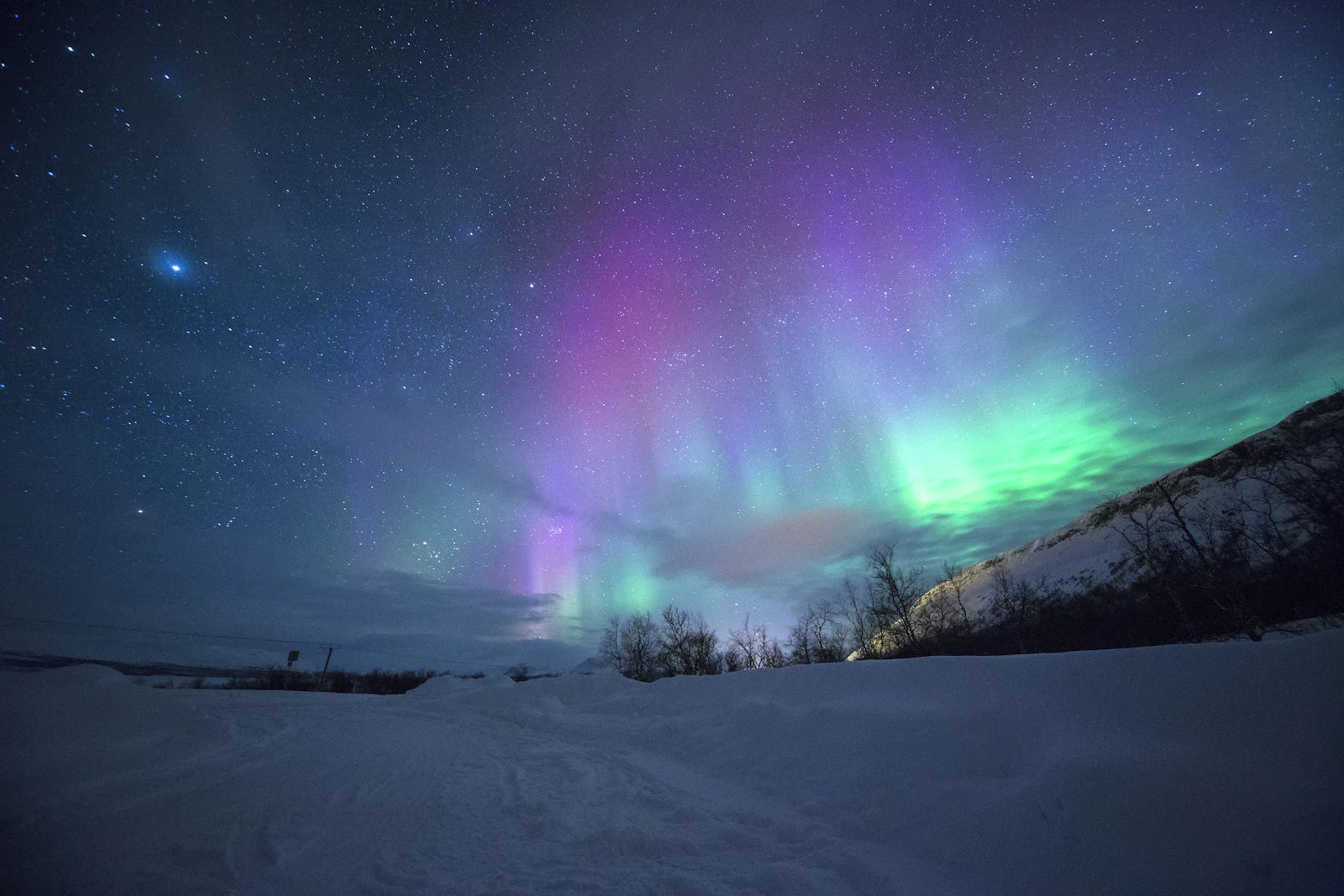
Tromsø can become expensive when winter excursions, specialist clothing, accommodation demand, and local transportation are added together. Travelers interested in northern lights should decide which experiences genuinely require a paid tour before booking.
For connectivity planning, review our SIM cards resource or our international eSIM guide before departure.
Free and Low-Cost Things to Do in Norway
Norway’s natural environment creates some of the strongest low-cost travel opportunities through hiking, walking, viewpoints, beaches, forests, lakes, photography, and responsible outdoor recreation.

9. Understand Norway’s right to roam
Norway’s right-to-roam framework provides opportunities for responsible recreation in eligible open countryside, but the right comes with restrictions and responsibilities. The Norwegian Environment Agency explains that people may walk, rest, hike, ski, and camp in appropriate open-country areas.
For camping in lowland open country, the Norwegian Environment Agency states that overnight tent camping is generally allowed for up to 48 hours in one location without prior permission from the landowner. Tents must generally be at least 150 metres from an inhabited house or cabin unless local bylaws provide otherwise.
Local restrictions can apply in recreational areas, nature reserves, and high-pressure destinations. Check the Norwegian Environment Agency’s camping guidance before camping.
10. Create alternating-cost days
Alternating paid and low-cost days creates a more stable travel budget than paying for an organized experience every day. A paid fjord excursion can be followed by a hiking, walking, photography, or city-exploration day.
This approach also creates flexibility when weather changes your plans. You are less likely to lose money by cancelling multiple prepaid activities on the same day.
When to Visit Norway for Lower Costs
May, early June, late August, and September can provide opportunities for lower costs than Norway’s busiest summer period, although exact prices vary by destination. Visit Norway identifies school holidays, especially roughly mid-June through mid-August, as peak season and specifically highlights those shoulder-season months as potentially less expensive.
Shoulder-season travel can be especially useful for travelers who want a balance between outdoor access and lower demand. However, check local opening schedules, weather conditions, ferry operations, mountain access, and accommodation availability before committing.
Visit Norway’s month-by-month Norway guidance is useful when matching a budget itinerary to seasonal conditions.
11. Choose the season based on the experience
The cheapest season is not automatically the best-value season if it prevents you from doing the activities that motivated the trip. Hiking, northern lights, skiing, road travel, and fjord excursions have different seasonal requirements.
For example, a winter northern-lights trip may require paid transport and specialist equipment, while a shoulder-season city and hiking trip can potentially rely more heavily on walking and public transport.
A Practical 7-Day Norway Budget Itinerary
A first-time seven-day Norway itinerary should focus on one connected region rather than trying to visit Oslo, Bergen, Lofoten, Tromsø, and multiple fjords in the same week.
| Day | Base | Budget-focused plan |
|---|---|---|
| 1 | Oslo | Walk the waterfront, parks and central areas |
| 2 | Oslo | Choose one paid attraction and several free activities |
| 3 | Oslo to Bergen | Use rail or another suitable public transport option |
| 4 | Bergen | Explore the centre, harbour and walking routes |
| 5 | Bergen region | Choose one carefully selected fjord experience |
| 6 | Bergen | Outdoor exploration and grocery-based meals |
| 7 | Departure | Keep a realistic airport and transport buffer |
This is intentionally slower than a checklist itinerary. The purpose is to protect both money and time. A traveler who spends half the week moving between destinations may see more locations but have less usable time at each one.
Travelers who prefer packaged arrangements can compare package tour options with an independent itinerary before booking.
Illustrative daily cost model
A useful planning model is to separate the accommodation reference from food, local transport, intercity transport, and activities. If two people share a NOK 1,725 hotel room, the simple accommodation reference becomes about NOK 862.50 per person per night before taxes, discounts, or actual market variation.
If two budget restaurant meals are modeled at NOK 500 per person and local transport plus small costs are estimated at NOK 150, the illustrative baseline becomes about NOK 1,512.50 per person per day before long-distance transportation and major activities.
This is not a quoted Norway travel price. A traveler using hostels, cabins, camping, groceries, walking, and free activities could spend less, while a traveler using private rooms, restaurants, taxis, and guided tours could spend considerably more.
The Norway Trip Cost-Control Matrix
The most useful way to control a Norway trip is to identify which expense categories are fixed, flexible, avoidable, or worth paying for. This matrix turns broad saving advice into a practical decision system.
| Expense | Keep | Reduce | Question to ask |
|---|---|---|---|
| International flight | Reasonable arrival time | Flexible dates | Does a cheaper fare create expensive transfers? |
| Hotel | Safe practical location | Luxury extras | Will the location reduce transport costs? |
| Food | One or two memorable meals | Daily restaurant dining | Can breakfast or lunch come from groceries? |
| Transport | Necessary long-distance routes | Unnecessary city changes | Can one base replace two? |
| Activities | Signature experiences | Duplicate tours | Can this experience be enjoyed independently? |
| Connectivity | Reliable data | Unplanned roaming | Does my existing plan cover Norway? |
| Insurance | Appropriate coverage | Unnecessary duplicate cover | What does my existing policy already cover? |
This approach adds practical information beyond a generic list of travel tips because every saving decision is evaluated against the total trip rather than against a single price.
15 Budget Travel Norway Mistakes to Avoid
Most expensive Norway travel mistakes happen when travelers optimize one price while ignoring the total cost of the itinerary.
12. Booking accommodation before transportation
Transportation should be checked before finalizing accommodation because a cheap room can create expensive daily transfers.
13. Changing cities too often
Fewer destination changes usually make a seven-day Norway itinerary easier to control.
14. Eating every meal at restaurants
Combining supermarkets with selected restaurant meals can make food spending much more predictable.
15. Paying for every scenic experience
Some hikes, viewpoints, walking routes, and outdoor activities can provide significant value without an admission fee.
16. Assuming a rental car is automatically cheaper
Rental-car costs include the vehicle, fuel, parking, tolls, insurance, and potentially ferry expenses, so compare the complete cost against public transport.
Use our car and bike rental resource when comparing driving with rail, bus, and ferry options.
17. Removing travel insurance from the budget
Travel insurance should be treated as part of the trip budget because medical, cancellation, baggage, and activity risks can create costs far beyond the original saving.
Review our insurance resource and our travel insurance guide before departure.
18. Ignoring connectivity costs
International roaming can become an overlooked travel expense, so check your existing mobile plan before purchasing another service.
19. Assuming winter is always cheaper
Winter can introduce additional costs for specialist equipment, tours, transport, and high-demand accommodation.
20. Camping without checking local rules
Free camping opportunities do not remove the need to follow national and local restrictions.
21. Planning too many paid activities
A small number of meaningful paid experiences can leave more room in the budget for spontaneous exploration.
22. Forgetting weather flexibility
Keeping part of the itinerary flexible reduces the financial risk of weather-related cancellations and changes.
23. Ignoring baggage and transfer costs
A low headline fare may not remain low after baggage, airport transfers, and local transportation are added.
24. Booking without checking official information
Schedules, fares, entry rules, and local restrictions change, so verify important information with the relevant official authority before payment.
25. Spending the entire budget before departure
A contingency reserve protects the trip when transportation, weather, or accommodation plans change unexpectedly.
Budget Travel Norway Planning Checklist
Use this checklist before booking so your Norway travel budget reflects the complete trip rather than isolated prices.
- Choose one main geographic region.
- Set a maximum total trip budget.
- Separate international airfare from the Norway spending budget.
- Compare hotels, hostels, cabins, apartments, and campsites.
- Check transportation before confirming accommodation.
- Compare train, bus, ferry, and flight options.
- Plan several free outdoor activities.
- Select the paid experiences that genuinely matter to you.
- Build a grocery and restaurant meal mix.
- Check mobile-data requirements.
- Budget for travel insurance.
- Keep money available for weather changes.
- Check official camping rules before using outdoor accommodation.
- Verify current transportation prices immediately before booking.
- Keep a contingency amount separate from daily spending.
For a broader framework, use our guide to planning a trip. It is particularly relevant to Norway because geography can have a larger effect on total cost than many travelers expect.
Budget Travel Norway for First-Timers: Frequently Asked Questions
These answers address common long-tail questions about affordable Norway trips, transportation, accommodation, food, camping, and seasonal planning.
Is budget travel Norway for first-timers realistic?
Yes. Budget travel Norway for first-timers is realistic when accommodation, food, transportation, and paid activities are planned together. The strongest opportunities usually come from staying longer in fewer places, using public transportation, preparing some meals, and prioritizing free outdoor experiences.
How much does a first-time Norway trip cost?
There is no single total because accommodation, season, destination, transportation, and activities vary. Visit Norway’s 2026 reference figures include about NOK 1,725 for an average hotel room and NOK 190–350 for a budget restaurant meal.
What is the cheapest way to travel around Norway?
The answer depends on the route. Compare trains, buses, ferries, local public transportation, and flights using the complete door-to-door cost. Reducing unnecessary destination changes can also reduce transportation spending.
Where can first-time visitors stay cheaply in Norway?
Hostels, campsites, basic cabins, guesthouses, apartments, and shared accommodation can provide alternatives to conventional hotels. Visit Norway lists basic campsite cabins from around NOK 700, although actual prices vary.
Can I visit Norway on a low daily budget?
You can reduce daily spending through groceries, walking, public transportation, free outdoor activities, and shared accommodation. A very low daily target becomes more difficult when private rooms, long-distance transportation, restaurant meals, and guided excursions are included.
What are the cheapest things to do in Norway?
Hiking, walking, viewpoints, photography, public spaces, beaches, forests, and many outdoor activities can be inexpensive. Transportation to remote locations should still be included in the budget.
When is Norway cheaper for first-time visitors?
Visit Norway identifies May, early June, late August, and September as potentially less expensive periods than the busiest school-holiday summer period. Destination-specific prices and operating schedules still need to be checked.
Is Oslo suitable for an affordable first Norway trip?
Oslo can work for a budget-focused first visit because travelers can combine walking, public spaces, waterfront areas, parks, and local transportation without adding several long-distance transfers.
Is Bergen a good base for affordable fjord travel?
Bergen can work well as a base because the city has a compact centre and access to western Norway’s fjord region. The main budget decision is limiting expensive excursions and comparing independent transportation options.
Can I camp for free in Norway?
Responsible camping may be possible under Norway’s right-to-roam framework, but restrictions apply. In lowland open country, the Norwegian Environment Agency states that camping is generally limited to up to 48 hours in one location and tents generally need to be at least 150 metres from inhabited houses or cabins unless local rules differ.
Should I rent a car for a budget Norway itinerary?
A rental car can be useful for remote routes or groups sharing expenses, but compare fuel, tolls, parking, rental charges, insurance, and ferry costs against public transportation before booking.
How can I save money on food in Norway?
Buy groceries, prepare breakfast and some lunches, carry a reusable bottle, and choose selected restaurant meals. Visit Norway specifically recommends buying local food and preparing meals as ways to control food costs.
Do I need travel insurance for a Norway trip?
Travel insurance requirements depend on your circumstances, nationality, itinerary, and visa situation. Travelers should review the coverage needed for medical expenses, cancellation, baggage, and activities before departure.
Do I need a visa to visit Norway?
Visa requirements depend on nationality and circumstances. The Norwegian Directorate of Immigration states that eligible visitors can apply for a visitor visa for stays of up to 90 days, while some nationalities are exempt from visitor-visa requirements.
Check the Norwegian Directorate of Immigration visitor visa guidance for your specific nationality before making non-refundable bookings.
Final Takeaway: Spend Deliberately, Not Simply Less
Budget travel Norway for first-timers is strongest when the itinerary is designed around total value instead of the lowest possible price in every category. Save where the saving does not damage the trip: use practical accommodation, public transportation, groceries, free outdoor activities, and fewer destination changes.
Then spend deliberately on the experiences that make the Norway trip worthwhile. One memorable fjord experience may provide more value than three inexpensive attractions that require long transfers.
Before booking, calculate lodging, food, local transportation, intercity transportation, activities, insurance, connectivity, and contingency together. That calculation gives you a more realistic picture than a hotel price or airfare alone.
For travelers continuing through Europe, compare this approach with our Europe strict-budget guide and our Europe budget travel guide.
The goal is not simply to spend fewer Norwegian kroner; the goal is to turn every krone into more useful travel time, better experiences, and fewer avoidable costs.